

The cost of predictive maintenance software for airport X-ray scanners varies significantly based on deployment scale, hardware requirements, and service tiers, typically ranging from per-unit subscription fees to enterprise-wide licensing models. There is no single fixed price tag because the investment depends on the specific mix of equipment, the depth of AI analytics required, and the integration complexity with existing airport infrastructure. This guide breaks down the financial components of implementing AI-driven maintenance for X-Ray systems, explaining how to evaluate total cost of ownership (TCO) against the operational benefits of reduced downtime and extended asset life.
How is the total cost of ownership calculated?
When budgeting for predictive maintenance, airports must look beyond the initial software license. The total cost of ownership (TCO) includes hardware acquisition, data infrastructure, ongoing subscription fees, and the labor costs associated with transitioning from reactive to proactive maintenance. A predictive maintenance platform is an augmented analytics solution that processes real-time data to forecast failures, meaning the cost is tied to the volume and quality of data ingested.
Initial Setup and Integration
Initial costs often involve the physical installation of edge devices that connect to the X-ray systems. These devices collect, process, and consolidate data from the equipment. For systems connected to an intranet, an on-site server may be required, adding to the capital expenditure. The complexity of integrating with legacy systems versus modern Computed Tomography (CT) technologies can also influence the setup timeline and associated professional services fees.
Ongoing Operational Costs
Ongoing costs typically follow a subscription model. This covers the cloud infrastructure for data storage, the computational power for AI and machine learning models, and access to the business intelligence dashboard. The price per unit may vary depending on the type of X-ray system, such as Explosive Detection Systems for Cabin Baggage (EDSCB) or Air Cargo Inspection Systems (ACIS).
What hardware is required for data collection?
Effective predictive maintenance relies on continuous data streaming. The core hardware component is the connectivity edge device, such as the DanlexBox, which plugs into the X-ray unit's Ethernet port. This device acts as the bridge between the physical asset and the cloud-based analytics platform. It monitors a wide range of physical parameters, including thermal data from the X-ray generator, which is critical for condition-based maintenance.
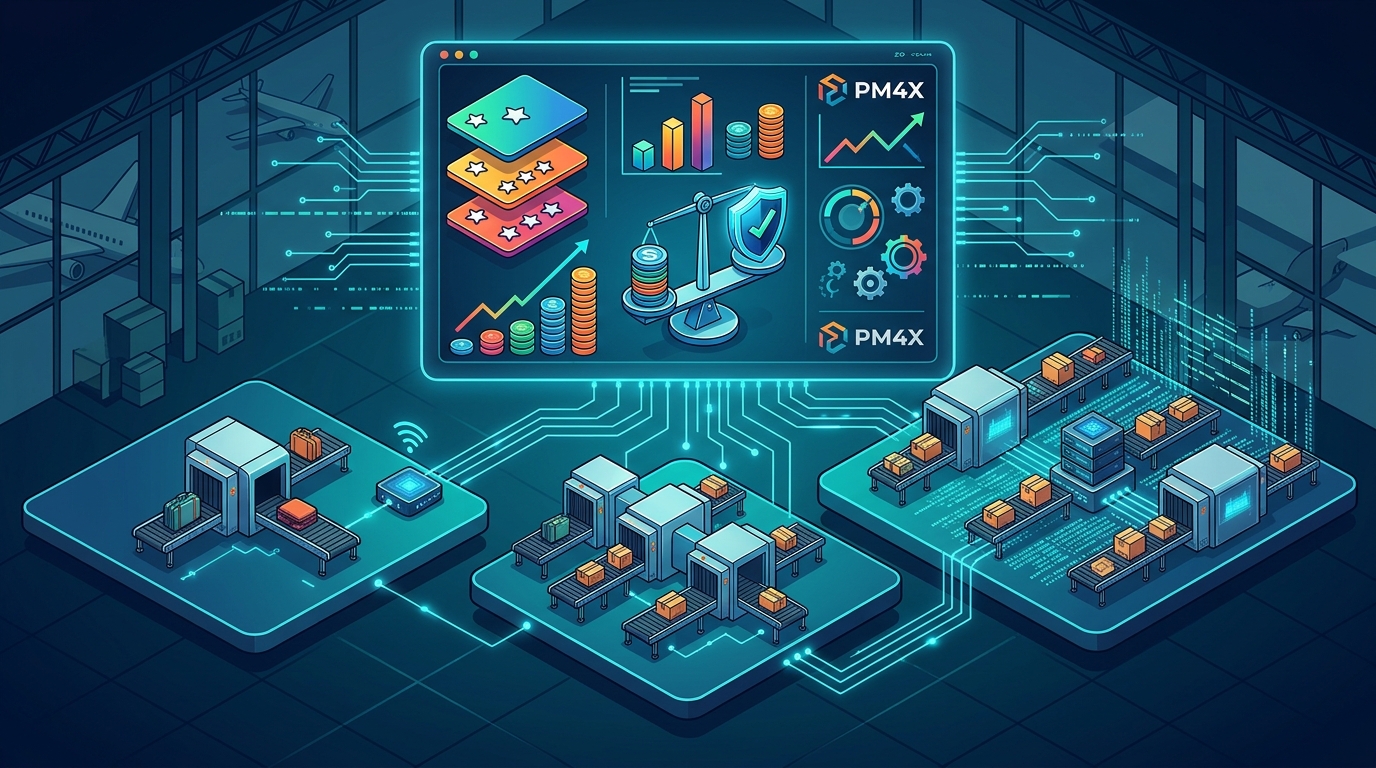
Edge Device Specifications
The edge device must meet high cybersecurity and data protection standards. It is designed to be vendor-agnostic, meaning it can connect to X-ray systems from different manufacturers. This flexibility is a key cost driver; a universal hardware solution reduces the need for custom integration work for each new piece of equipment. The device offers the flexibility to adapt to specific customer requirements, ensuring that the data collected is relevant to the specific maintenance models being used.
Network and Security Requirements
Deploying these devices requires a secure network environment. The data infrastructure must comply with ISO/IEC 27001 (Information Security Management System) and other relevant standards. Airports must ensure that the addition of these IIoT devices does not compromise the security of their existing IT networks. The cost of ensuring this compliance, including potential network upgrades or firewall configurations, should be included in the budget.
How do software licensing models affect pricing?
Software licensing for predictive maintenance platforms generally falls into two categories: SaaS (Software as a Service) and on-premises deployment. The SaaS model is more common for this type of solution, offering scalability and lower upfront capital costs. The platform is delivered as a scalable SaaS or on-premises platform, allowing airports to choose the model that best fits their IT strategy and budget constraints.
SaaS Subscription Tiers
SaaS pricing is often tiered based on the number of assets monitored and the depth of analytics provided. Basic tiers may offer real-time status monitoring and historical data overview. Advanced tiers include predictive models that estimate the probability of failure and survival models that estimate the remaining useful life of key components. The more sophisticated the AI models, the higher the subscription cost, but the greater the potential for preventing costly downtime.
On-Premises Licensing
For airports with strict data sovereignty requirements, an on-premises deployment may be preferred. This involves installing the software on local servers. While this may offer greater control over data, it typically requires a higher initial license fee and ongoing maintenance contracts for the software itself. The cost of managing the on-premises infrastructure, including server hardware and IT staff, must be factored into the TCO.
How do OEM service contracts compare to third-party predictive maintenance?
Traditional maintenance for X-ray systems is often handled through Original Equipment Manufacturer (OEM) service contracts. These contracts are typically reactive or calendar-based, meaning maintenance is performed after a failure occurs or at fixed intervals. While OEM contracts provide a single point of contact, they can be expensive and may not offer the granular, real-time insights that AI-driven predictive maintenance provides. A third-party, vendor-agnostic solution like PM4X offers an alternative approach that can complement or replace certain aspects of OEM contracts.
The Limitations of Reactive Maintenance
Reactive maintenance is costly because it often involves emergency repairs and expedited shipping of spare parts. Calendar-based maintenance can lead to unnecessary replacements of healthy components, wasting resources. Predictive maintenance shifts the paradigm to condition-based, where maintenance is performed only when the data indicates a deviation from normal operation. This approach can significantly reduce maintenance costs and extend the lifespan of the equipment.
Vendor-Agnostic Advantages
One of the key financial advantages of a vendor-agnostic predictive maintenance platform is the ability to manage a diverse fleet of X-ray systems under a single contract. Airports often have equipment from multiple manufacturers and different generations. Managing separate service contracts for each OEM can be administratively burdensome and costly. A unified platform simplifies this process, providing a holistic view of asset health and enabling more efficient spare parts management.
| Feature | OEM Reactive Contract | Third-Party Predictive Platform |
|---|---|---|
| Maintenance Trigger | Failure or Fixed Schedule | Real-Time Data Anomalies |
| Vendor Lock-in | High (Tied to specific OEM) | Low (Vendor-Agnostic) |
| Visibility | Post-Failure Reports | 24/7 Real-Time Monitoring |
| Spare Parts Management | Reactive Ordering | Optimized Inventory via RUL |
| Cost Structure | Per-Service Call or Annual Fee | Subscription + Hardware |
How does predictive maintenance impact ROI?
The return on investment for predictive maintenance software is realized through reduced downtime, lower maintenance costs, and extended asset life. Every minute an X-ray screening lane stands still, an airport loses throughput. By predicting failures days or weeks in advance, maintenance teams can schedule repairs during off-peak periods, minimizing the impact on operations. This proactive approach ensures high equipment availability, which is a critical KPI for airport security and efficiency.
Reducing Total Lifecycle Costs
Predictive maintenance helps optimize the lifecycle of X-ray systems. By monitoring critical components and detecting early signs of degradation, the platform mitigates the risk of catastrophic breakdowns that could require full system replacement. This extends the useful life of the equipment, delaying the need for capital expenditure on new systems. The survival models estimate the remaining useful life of key components, allowing for better budgeting and inventory management.
Operational Efficiency and Compliance
Automated compliance reporting and secure, traceable maintenance records help airports meet aviation security and cybersecurity requirements. This reduces the administrative burden on maintenance teams and ensures that all maintenance activities are documented and auditable. The decision-support dashboards turn raw data into actionable insights, enabling maintenance teams and executives to make informed decisions about asset management. The result is a more efficient, secure, and cost-effective screening operation.
Key Takeaways
- There is no single fixed price for predictive maintenance software; costs depend on deployment scale, hardware, and service tiers.
- Total cost of ownership includes hardware (edge devices), software subscription, and integration services.
- Vendor-agnostic platforms can reduce costs by managing diverse fleets under a single contract, avoiding OEM lock-in.
- SaaS models offer scalability and lower upfront costs, while on-premises options provide greater data control.
- ROI is driven by reduced downtime, optimized spare parts inventory, and extended asset life.
- AI-driven predictive maintenance shifts from reactive to condition-based, reducing unnecessary maintenance.
- Compliance and security features are essential for airport environments and should be factored into the cost evaluation.
Frequently Asked Questions
Does predictive maintenance software work with all X-ray manufacturers?
Yes, vendor-agnostic solutions like PM4X are designed to work with X-ray systems from various manufacturers. The connectivity edge device adapts to specific customer requirements and can collect data from different types of equipment, including conventional X-ray systems and newer CT technologies. This flexibility allows airports to monitor their entire fleet regardless of the original equipment provider.
How long does it take to see a return on investment?
The timeline for ROI varies depending on the size of the fleet and the frequency of failures. However, by predicting failures and scheduling maintenance during off-peak times, airports can quickly reduce the costs associated with emergency repairs and downtime. The extension of asset life also contributes to long-term savings, delaying the need for capital replacement.
Is the data secure?
Yes, the platform meets the highest cybersecurity and data protection standards. The data infrastructure is located in a secure facility and operates according to ISO/IEC 27001 and other relevant certifications. This ensures that the sensitive operational data from airport security systems is protected from unauthorized access.
Can I integrate this with my existing maintenance management system?
The platform provides a BI dashboard that brings together processed data and model results. While specific integration capabilities depend on the provider, the goal is to provide valuable insights to service specialists. The automated alert notification system can be configured to send alerts via email and SMS, which can be integrated into existing workflows.
What is the difference between condition-based and predictive maintenance?
Condition-based maintenance uses real-time data to identify changes or deviations from normal operation, indicating that maintenance is needed. Predictive maintenance goes a step further by using AI models to estimate the probability of failure and the remaining useful life of components, allowing for proactive planning. Both approaches are more efficient than reactive or calendar-based maintenance. Learn more: Home PM4X.