

Deploying predictive maintenance for air cargo X-ray systems typically takes 3 to 6 months, depending on fleet size and network complexity. This timeline covers the transition from initial assessment to full operational monitoring. The process involves hardware installation, data integration, and AI model calibration. This guide details the specific phases, procurement lead times, and technical requirements for a successful rollout.
Deployment Timeline Estimates
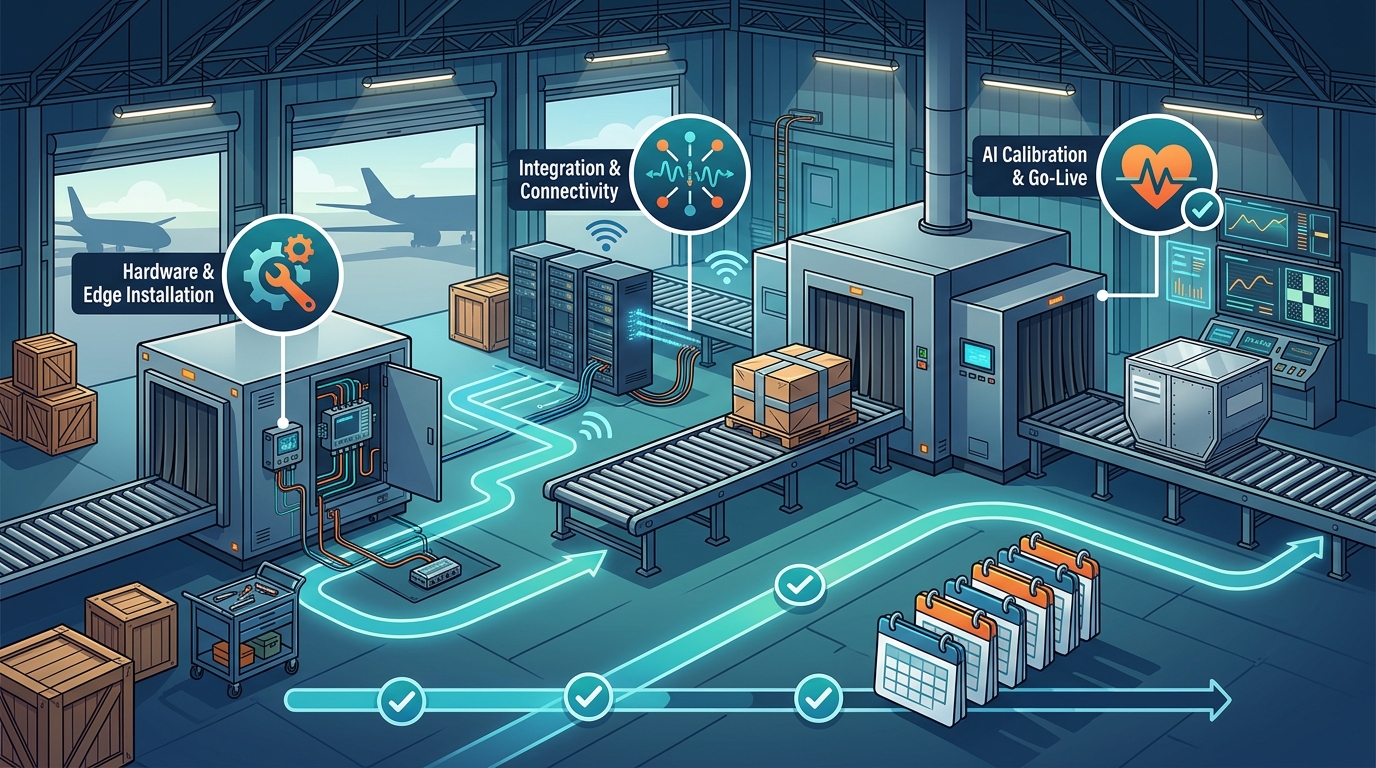
The total duration for a predictive maintenance deployment is driven by the complexity of the existing infrastructure. A standard deployment for a single site with a small fleet of X-ray systems usually spans 8 to 12 weeks. Larger multi-site deployments or those involving legacy equipment may extend to 6 months. The timeline is divided into three distinct phases: preparation, installation, and calibration.
Phase 1: Assessment and Preparation
The first 2 to 4 weeks are dedicated to site assessment. Engineers audit the existing X-ray systems to determine connectivity options. This phase includes mapping the network topology and identifying data points for the Industrial Internet of Things (IIoT) devices. The goal is to create a detailed implementation plan that minimizes operational disruption. To see how this process works in practice, you can schedule a demo.
Phase 2: Hardware Installation
Hardware installation typically takes 2 to 4 weeks. Technicians install edge devices on the X-ray units. This step requires coordination with facility management to schedule work during off-peak hours. The physical connection of sensors and gateways is straightforward but must be done carefully to avoid interfering with security operations. Our team ensures that these installations are performed with precision and minimal disruption.
Phase 3: Calibration and Go-Live
The final phase lasts 4 to 8 weeks. During this period, the system collects baseline data. AI models are trained on this data to establish normal operating parameters. Once the models are calibrated, the platform goes live. This phase ensures that alerts are accurate and that the dashboard provides actionable insights.
| Deployment Phase | Typical Duration | Key Activities |
|---|---|---|
| Assessment | 2-4 weeks | Site audit, network mapping, planning |
| Installation | 2-4 weeks | Edge device setup, sensor connection |
| Calibration | 4-8 weeks | Data collection, model training, go-live |
Pilot Phase Planning
A pilot phase is essential for validating the predictive maintenance solution before a full rollout. The pilot typically involves 1 to 3 X-ray systems at a single location. This limited scope allows the team to test the technology in a controlled environment. It helps identify any integration issues without impacting the entire operation.
Defining Pilot Success Metrics
Success metrics for the pilot include data accuracy, alert reliability, and user adoption. The team tracks how well the AI models predict component health. They also measure the response time of the maintenance staff to alerts. Clear metrics ensure that the pilot provides actionable feedback for the full deployment.
Duration of the Pilot
The pilot phase usually lasts 4 to 8 weeks. This duration is sufficient to capture a range of operating conditions. It allows the system to learn from both normal and abnormal states. A successful pilot leads to a scaled rollout across the remaining fleet.
IIoT Sensor Retrofitting
IIoT sensor retrofitting is the technical core of the deployment. It involves connecting physical sensors to the X-ray systems to collect real-time data. The process is non-invasive and does not require major modifications to the equipment. It relies on proprietary edge devices that interface with the existing hardware.
Edge Device Installation
The edge device, such as the DanlexBox, connects to the X-ray system's Ethernet port. It collects, processes, and consolidates data from the system. This device acts as a bridge between the physical equipment and the cloud-based analytics platform. Installation is quick and can be performed by a single technician.
Data Integration and Security
Once installed, the edge device streams data to the platform. The data is encrypted in transit and at rest to ensure security. The platform complies with high cybersecurity standards, including ISO/IEC 27001. This ensures that sensitive operational data is protected from unauthorized access.
Procurement Lead Times
Procurement lead times can significantly impact the overall deployment schedule. The primary hardware component is the IIoT edge device. Lead times for these devices typically range from 4 to 8 weeks, depending on the manufacturer and current demand. Ordering early is critical to avoid delays in the installation phase.
Hardware vs. Software Licensing
Hardware procurement is the main bottleneck. Software licensing is usually immediate or takes a few days for contract approval. The platform is delivered as a SaaS solution, which means there is no need to procure and install server hardware. This reduces the complexity and time required for the software side of the deployment.
Supply Chain Considerations
Global supply chain disruptions can affect the availability of electronic components. It is advisable to order hardware as soon as the project is approved. This buffer time helps mitigate the risk of delays due to shipping or manufacturing issues. Early procurement ensures that the installation phase can start on schedule.
Key Takeaways
- Total deployment time for a single site is typically 3 to 6 months.
- The process is divided into assessment, installation, and calibration phases.
- A pilot phase of 4 to 8 weeks is recommended to validate the solution.
- IIoT edge devices are non-invasive and connect via Ethernet ports.
- Hardware procurement lead times are 4 to 8 weeks and should be prioritized.
- The platform is a SaaS solution, eliminating the need for on-premise servers.
- Calibration requires 4 to 8 weeks of data collection to train AI models.
Frequently Asked Questions
Does predictive maintenance require replacing existing X-ray systems?
No, predictive maintenance is a vendor-agnostic solution. It works with existing X-ray systems from various manufacturers. The IIoT edge device connects to the current hardware without requiring any replacement or major upgrades.
How does the platform handle cybersecurity?
The platform operates according to ISO/IEC 27001 standards. Data is encrypted during transmission and storage. The infrastructure is located in a secure data center that meets high security requirements to protect against unauthorized access.
Can the system monitor multiple sites simultaneously?
Yes, the platform is designed to scale. It can monitor X-ray systems across multiple sites and locations. The dashboard provides a unified view of asset health, allowing maintenance teams to manage a distributed fleet efficiently.
What kind of data does the system collect?
The system collects technical, operational, and environmental data. This includes parameters related to the X-ray generator, detectors, and other critical components. The data is used to monitor the condition of the equipment and predict potential failures. Learn more: Home PM4X.