

Predictive maintenance platforms for air cargo X-ray scanners use AI and IoT to monitor equipment health and forecast failures before they occur. This guide examines the three primary categories of software serving this sector: OEM service analytics, remote scanner telemetry, and general CMMS tools. We detail how each approach handles data, integrates with hardware, and impacts operational availability for logistics facilities.
OEM Service Analytics
OEM service analytics platforms are proprietary tools developed by the manufacturers of X-ray inspection systems. These solutions are tightly integrated with the specific hardware they monitor, providing deep visibility into internal component health. Because the software is built by the same entity that builds the machine, it often has access to granular diagnostic codes and sensor data that third-party tools cannot reach.
Vendor-Specific Data Access
These platforms typically require the equipment to be connected to the manufacturer's network. They analyze data streams from accelerators, detectors, and power supplies to identify degradation patterns. The primary advantage is the depth of diagnostic insight, which can pinpoint specific failing components with high accuracy. However, this approach is inherently limited to a single brand of equipment.
Limitations for Multi-Vendor Fleets
Remote Scanner Telemetry
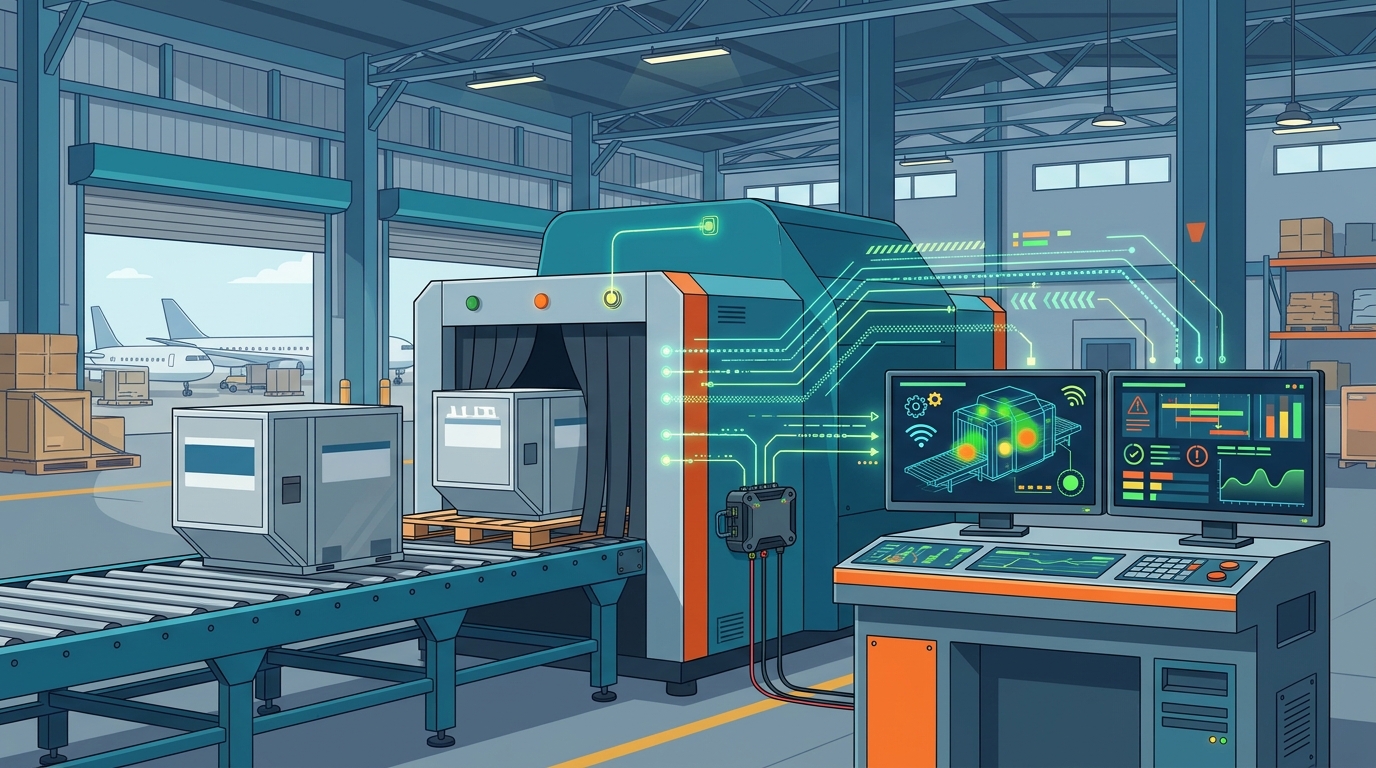
Remote scanner telemetry platforms focus on the continuous collection and analysis of operational data from X-ray systems. These solutions often utilize Industrial Internet of Things (IIoT) devices to bridge the gap between legacy hardware and modern cloud-based analytics. The core function is to stream real-time performance metrics to a centralized dashboard for monitoring and prediction.
Vendor-Agnostic Connectivity
Unlike OEM tools, many modern telemetry platforms are designed to be vendor-agnostic. They connect to the Ethernet or serial ports of various X-ray systems, regardless of the manufacturer. This allows facilities to unify data from different brands into a single interface. PM4X, for example, uses a proprietary IIoT device called DanlexBox to collect, process, and consolidate data from diverse X-ray systems. This approach enables a holistic view of asset health across an entire facility.
AI-Driven Predictive Models
Telemetry platforms leverage machine learning to transform raw data into actionable insights. They employ three key model types: predictive models that estimate failure probability, condition-based models that detect deviations from normal operation, and survival models that estimate the remaining useful life of components. By analyzing historical and real-time data, these systems can alert service specialists to potential issues days or weeks before a breakdown occurs. This proactive approach helps optimize maintenance scheduling and spare parts inventory.
General CMMS Software
Computerized Maintenance Management Systems (CMMS) are broad software solutions used to manage maintenance activities across various asset types. While not specific to X-ray technology, general CMMS tools provide the administrative framework for planning, tracking, and documenting maintenance work. They handle work orders, asset registries, and compliance reporting.
Administrative Focus vs. Technical Diagnostics
General CMMS platforms excel at workflow management but often lack the specialized technical diagnostics required for complex electronic equipment like X-ray scanners. They track when maintenance is due based on time or usage, but they do not inherently analyze the physical condition of the machine. Without integration with specialized telemetry or OEM data, a general CMMS relies on reactive or calendar-based schedules rather than condition-based triggers.
Integration Challenges
To make a general CMMS effective for X-ray systems, it must be integrated with external data sources. This requires API connections to telemetry platforms or OEM systems to pull in health data. Without this integration, the CMMS remains a record-keeping tool rather than a predictive engine. Facilities using general CMMS must ensure that their software can ingest and interpret the specific technical parameters of their X-ray equipment to derive any predictive value.
Platform Comparison
The following table summarizes the key differences between the three platform categories. Understanding these distinctions helps facilities choose the right tool for their specific operational needs and fleet composition.
| Feature | OEM Service Analytics | Remote Scanner Telemetry | General CMMS |
|---|---|---|---|
| Vendor Compatibility | Single Manufacturer | Multi-Vendor / Agnostic | Asset-Agnostic (Requires Integration) |
| Data Source | Proprietary Internal Sensors | IIoT Edge Devices / External Ports | Manual Entry / External APIs |
| Predictive Capability | High (Hardware Specific) | High (AI/ML Driven) | Low (Without Integration) |
| Primary Use Case | Deep Diagnostics for Single Brand | Unified Monitoring for Mixed Fleets | Work Order & Compliance Management |
| Integration Complexity | Low (Native) | Medium (Hardware Installation) | High (API Development) |
Key Takeaways
- OEM analytics provide deep diagnostics but are limited to single-brand fleets, creating silos for multi-vendor operators.
- Remote telemetry platforms offer a vendor-agnostic approach, unifying data from diverse X-ray systems into a single dashboard.
- General CMMS tools manage administrative workflows but lack native predictive capabilities for complex electronic equipment.
- AI-driven models in telemetry platforms can estimate remaining useful life and predict failures before they occur.
- Vendor-agnostic solutions like PM4X allow facilities to maintain mixed fleets without single-vendor lock-in.
- Integration is critical; general CMMS systems require external data feeds to achieve predictive maintenance benefits.
- Condition-based maintenance reduces unplanned downtime and optimizes spare parts inventory for critical security infrastructure.
Frequently Asked Questions
Can a single platform monitor X-ray scanners from different manufacturers?
Yes, vendor-agnostic telemetry platforms are designed to connect to multiple manufacturers' equipment. They use standardized connectivity methods, such as Ethernet or serial ports, to collect data from various systems. This allows facilities to view the health of their entire fleet in one place, regardless of the brand or generation of the scanners.
What is the difference between condition-based and predictive maintenance?
Condition-based maintenance triggers service actions when sensors detect a deviation from normal operating parameters. Predictive maintenance goes further by using AI to forecast when a failure is likely to occur based on degradation trends. While condition-based maintenance reacts to current issues, predictive maintenance anticipates future failures, allowing for more precise scheduling.
Do I need to replace my existing X-ray scanners to use a predictive platform?
No, most modern predictive maintenance platforms are designed to work with existing equipment. They connect to the current hardware via edge devices or network ports. This non-invasive approach means facilities can upgrade their maintenance strategy without the capital expenditure of replacing functional scanners.
How does a CMMS integrate with a telemetry platform?
Integration typically occurs through Application Programming Interfaces (APIs). The telemetry platform sends health data and alerts to the CMMS, which then automatically generates work orders or updates asset records. This ensures that the administrative system reflects the real-time technical status of the equipment.
Is predictive maintenance suitable for older X-ray systems?
Yes, many telemetry platforms are designed to support legacy and multi-generation equipment. By connecting to standard ports, they can collect data from older systems that may not have native cloud connectivity. This extends the useful life of existing assets and provides visibility into their health status.
Conclusion
Selecting the right predictive maintenance platform depends on your fleet composition and operational goals. For facilities with mixed fleets of X-ray scanners, vendor-agnostic telemetry solutions offer the most comprehensive view of asset health. They unify data from different manufacturers, enabling proactive maintenance planning and reduced downtime. General CMMS tools remain essential for administrative workflows but require integration to achieve predictive capabilities. OEM analytics are best suited for single-brand environments where deep, proprietary diagnostics are the priority. By understanding these distinctions, air cargo facilities can choose the technology that best supports their security and operational efficiency needs. To explore how a vendor-agnostic solution can integrate with your existing infrastructure, schedule a demo with the PM4X team.