
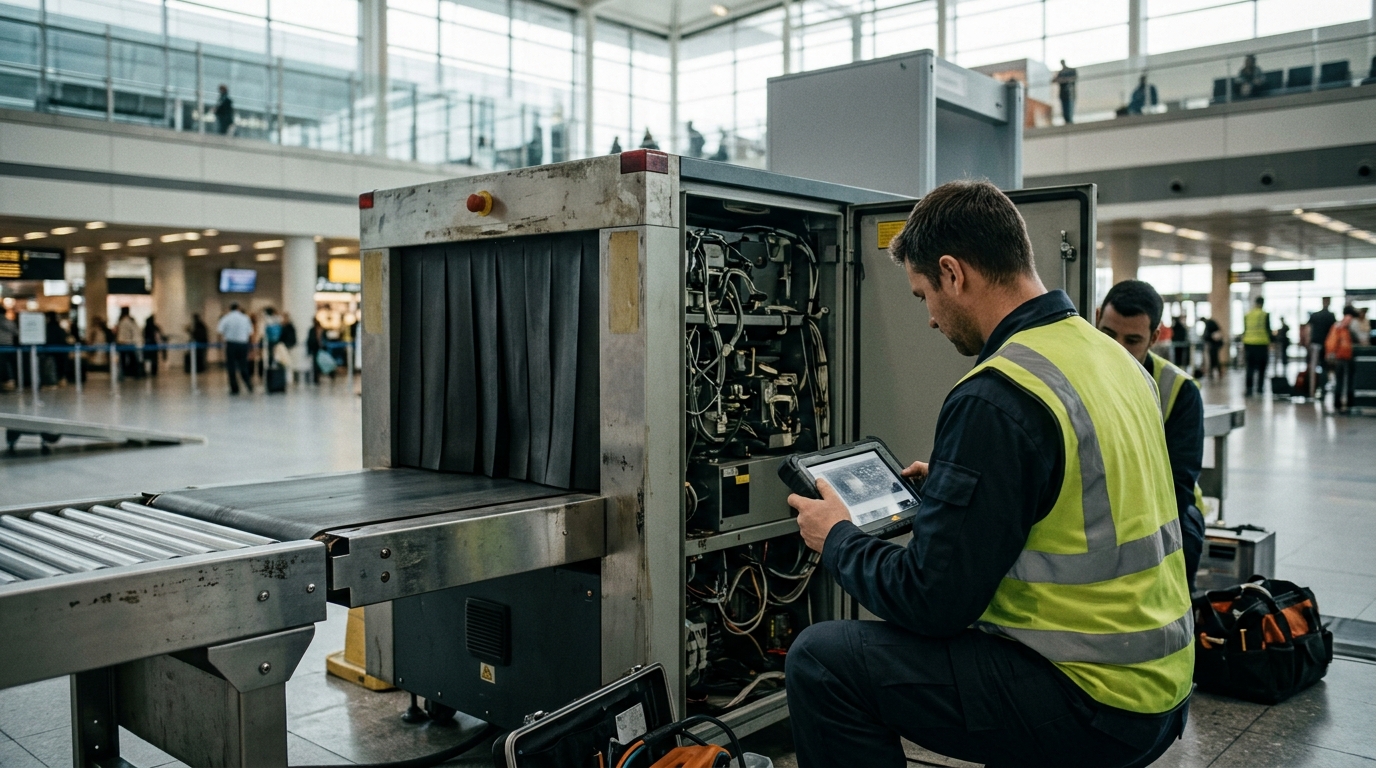
Smart AI platforms for X-ray security equipment maintenance use machine learning and real-time telemetry to predict component failures before they occur. These systems shift operations from reactive repairs to proactive, data-driven management. This guide covers the core technologies, including predictive models, condition-based monitoring, IIoT telemetry, and remote diagnostics, explaining how they work together to keep critical security infrastructure operational.
Predictive Maintenance Platforms
Predictive maintenance is a strategy that uses data analysis to forecast when a machine is likely to fail. Unlike traditional calendar-based maintenance, which replaces parts on a fixed schedule, predictive maintenance relies on actual equipment health indicators. This approach allows service teams to intervene only when necessary, reducing unnecessary labor and parts costs.
How AI Models Estimate Failure Risk
At the core of these platforms are AI and machine learning models that analyze historical and real-time data. These models estimate the probability of failure by identifying patterns associated with upcoming component breakdowns. For example, a predictive model might detect a gradual increase in power consumption that signals a failing X-ray generator tube. By forecasting failure risk over specific time horizons, such as two or six months, the platform enables proactive spare-parts management.
The Role of Survival Models
Survival models are a specific type of statistical analysis used to estimate the remaining useful life (RUL) of key components. These models help optimize inventory management by predicting when a part will need replacement. This precision helps avoid both premature replacement and unexpected breakdowns, ensuring that maintenance resources are allocated efficiently. The result is a shift from a reactive posture to a proactive, data-driven one.
Condition-Based Maintenance
Condition-based maintenance (CBM) is a method that monitors the actual operating condition of equipment to determine when maintenance is needed. It focuses on identifying changes or deviations from normal operating modes in real time. This approach ensures that maintenance actions are triggered by actual equipment status rather than time intervals.
Real-Time Health Monitoring
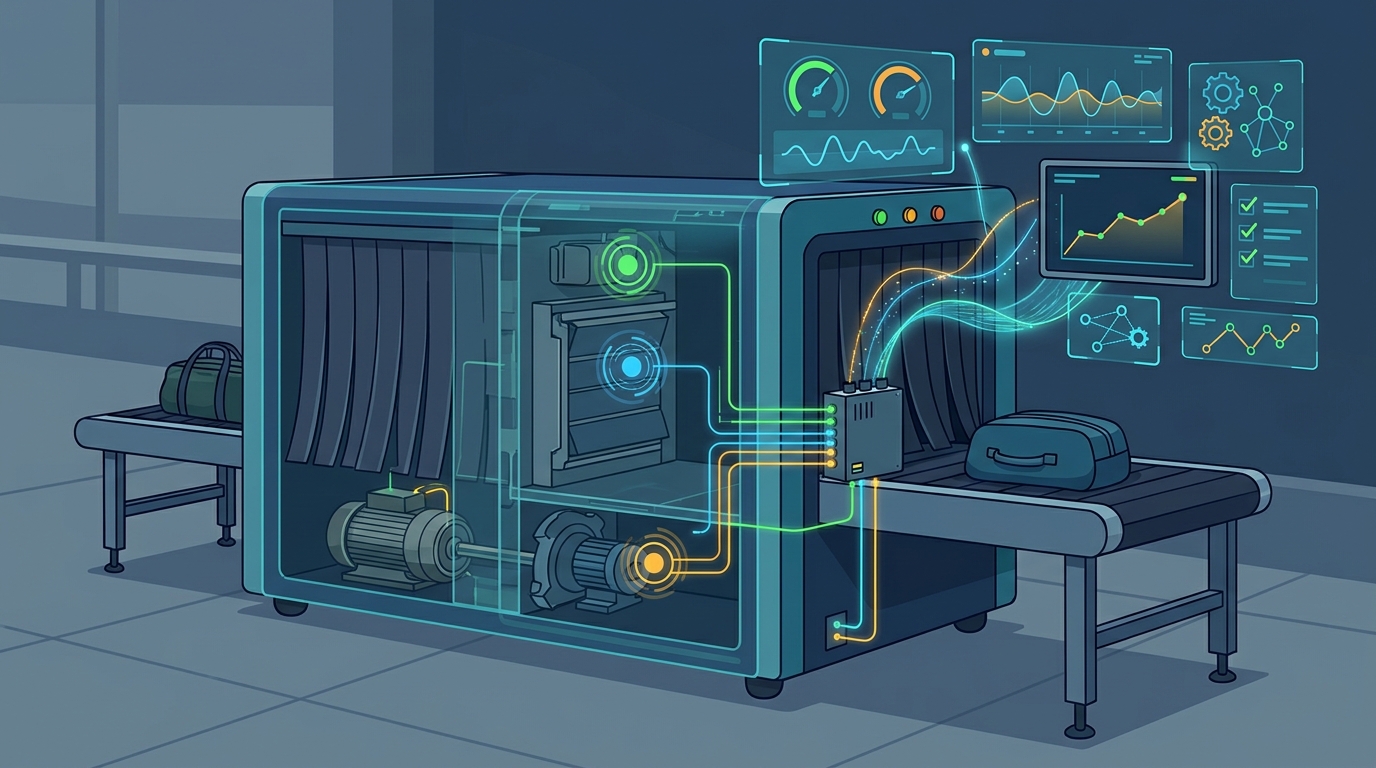
CBM platforms continuously monitor key performance indicators (KPIs) of X-ray systems. These indicators include technical parameters, operational data, and environmental conditions. By analyzing this data in real time, the system can identify anomalies that indicate developing faults. This early detection allows service specialists to assess the risk of failure and take appropriate action to reduce downtime.
Image Quality and Detector Drift
A critical aspect of CBM for X-ray systems is monitoring image quality parameters. Over time, detectors can experience drift, which degrades image quality and affects screening accuracy. The platform detects deviations from established baselines, helping to prevent this degradation. This ensures consistent image acquisition and maintains the reliability of the screening process.
IIoT Telemetry Monitoring
Industrial Internet of Things (IIoT) telemetry is the process of collecting and transmitting data from industrial equipment to a central platform. This data includes technical, operational, and environmental parameters that provide a comprehensive view of the system's health. IIoT serves as the data backbone for both predictive and condition-based maintenance.
Edge Devices and Data Collection
IIoT connectivity is often achieved through proprietary edge devices that connect to the equipment's Ethernet port. These devices collect, process, and consolidate data from the X-ray system before transmitting it to the cloud or on-premises server. They offer the flexibility to adapt to specific customer requirements and monitor a wide range of additional physical parameters. This ensures that the platform has access to the most relevant data for accurate analysis.
Multi-Vendor Data Acquisition
A key advantage of modern IIoT platforms is their ability to handle multi-vendor data. Security facilities often operate fleets of X-ray systems from different manufacturers and generations. A vendor-agnostic IIoT layer can collect data from diverse equipment types, unifying them under a single monitoring platform. This eliminates single-vendor lock-in and allows for holistic fleet management.
Remote Diagnostics
Remote diagnostics is the practice of analyzing equipment data and performing troubleshooting from a location separate from the physical asset. This capability allows service specialists to assess system health and identify root causes of failures without being on-site. It significantly reduces response times and travel costs for maintenance teams.
Root-Cause Failure Analysis
When an anomaly is detected, the platform provides remote diagnostics and root-cause failure analysis. Service specialists can review historical data and real-time values to understand the underlying issue. This analysis helps in determining the most effective corrective action, whether it is a software update, a hardware replacement, or a calibration adjustment. By identifying the root cause, the platform helps prevent recurring issues.
Automated Alert Notifications
Remote diagnostics is supported by automated alert notification systems. When the AI models detect a deviation or predict a failure, the platform sends alerts via email and SMS to service specialists. These alerts include recommended actions in response to the failure, enabling rapid response. This ensures that maintenance teams are aware of issues as soon as they arise and can take action before they escalate.
| Feature | Predictive Maintenance | Condition-Based Maintenance | IIoT Telemetry | Remote Diagnostics |
|---|---|---|---|---|
| Primary Function | Forecast failure probability | Monitor real-time health | Collect and transmit data | Analyze and troubleshoot remotely |
| Data Type | Historical and real-time | Real-time KPIs | Technical and environmental | Diagnostic logs and alerts |
| Output | Remaining Useful Life (RUL) | Anomaly detection | Continuous data stream | Root-cause analysis |
| Benefit | Optimized spare parts | Early fault detection | Multi-vendor compatibility | Reduced response time |
Key Takeaways
- Predictive maintenance uses AI to forecast failures, shifting from reactive to proactive management.
- Condition-based maintenance monitors real-time health to detect deviations from normal operation.
- IIoT telemetry provides the data backbone, collecting technical and environmental data from equipment.
- Remote diagnostics enables off-site troubleshooting and root-cause analysis, reducing response times.
- Vendor-agnostic platforms can manage multi-generation fleets from different manufacturers.
- Automated alerts ensure service teams are notified immediately when anomalies are detected.
- Survival models estimate remaining useful life, optimizing inventory and maintenance scheduling.
- These technologies work together to enhance asset performance and ensure high equipment availability.
Frequently Asked Questions
What is the difference between predictive and condition-based maintenance?
Predictive maintenance focuses on forecasting when a failure will occur using historical data and AI models. Condition-based maintenance focuses on monitoring the current state of the equipment in real time to detect immediate anomalies. Both approaches are complementary and often integrated into a single platform.
Can these platforms work with X-ray systems from different manufacturers?
Yes, vendor-agnostic platforms are designed to work with equipment from multiple manufacturers. They use flexible IIoT connectivity to collect data from diverse systems, allowing for unified monitoring and management of a multi-vendor fleet.
How does IIoT telemetry ensure data security?
IIoT devices and platforms are designed to meet high cybersecurity and data protection standards. Data is encrypted during transmission and stored in secure environments, ensuring the integrity and confidentiality of the information.
What types of data are collected by IIoT devices?
IIoT devices collect a wide range of data, including technical parameters (such as power consumption and temperature), operational data (such as usage hours and cycle counts), and environmental conditions. This comprehensive data set provides a holistic view of the equipment's health.
How do remote diagnostics reduce maintenance costs?
Remote diagnostics reduce costs by minimizing unnecessary on-site visits. Service specialists can often resolve issues or prepare for repairs remotely, reducing travel time and labor costs. It also allows for more efficient scheduling of maintenance activities.
Conclusion
Smart AI platforms for X-ray security equipment maintenance represent a significant advancement in asset management. By integrating predictive models, condition-based monitoring, IIoT telemetry, and remote diagnostics, these platforms provide a comprehensive solution for maintaining critical security infrastructure. They enable service teams to make informed decisions, optimize resources, and ensure high equipment availability. For organizations looking to enhance their maintenance strategies, exploring these technologies is a crucial step toward operational excellence. To learn more about how these solutions can be tailored to your specific needs, schedule a demo with the PM4X team. Learn more: Home PM4X.